
Radiopharmaceutical Therapy in Oncology: Is Cancer Treatment Entering the Era of Precision Theranostics?
Cancer treatment is becoming increasingly precise. We can identify molecular alterations, classify tumors according to biomarkers, visualize biological targets and select therapies for increasingly defined patient populations. But one rapidly advancing therapeutic field brings several of these capabilities together in an unusual way:
radiopharmaceutical therapy.
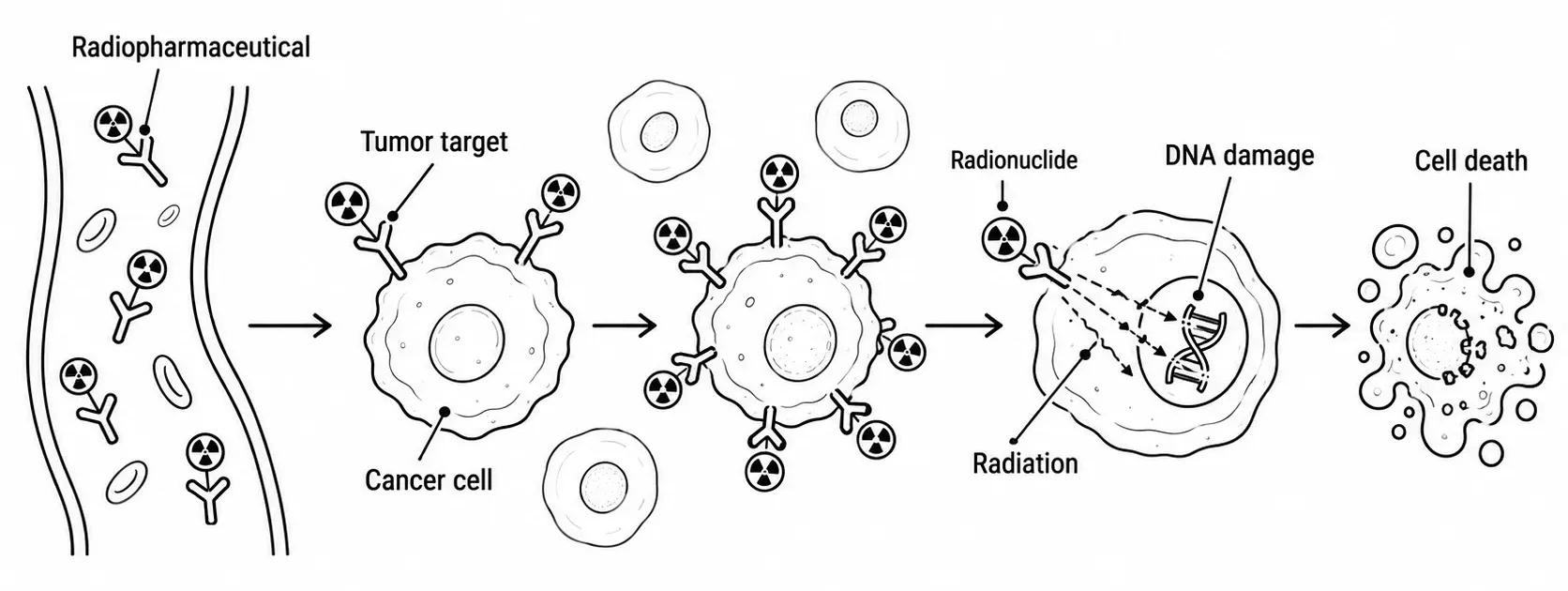
Instead of delivering radiation from outside the body, radiopharmaceutical therapy uses systemically administered molecules to carry radioactive isotopes toward specific biological targets. And in some cases, the same biological target can first be imaged and then treated.
This combination of diagnosis and therapy, commonly described as theranostics, is increasingly moving from specialist nuclear medicine into mainstream oncology. Clinical evidence from neuroendocrine tumors and prostate cancer has already demonstrated that targeted radionuclide therapy can improve clinically meaningful outcomes.
The research frontier is now moving further: New tumor targets, new isotopes, alpha-particle therapy, treatment combinations, earlier-line intervention and patient-specific dosimetry.
The question is therefore changing.
It is no longer simply:
Can targeted radiation work?
Increasingly, it is:
Which target, which radionuclide, which patient, which absorbed dose and at what point in the treatment pathway
What is radiopharmaceutical therapy?
A therapeutic radiopharmaceutical typically combines three fundamental components:
Targeting molecule + linker/chelator + therapeutic radionuclide
The targeting component recognizes a biological feature associated with cancer cells or the tumor microenvironment. The radionuclide provides the therapeutic effect by emitting radiation capable of damaging nearby cells. This creates an important difference from many conventional targeted drugs. A kinase inhibitor, for example, generally needs to interfere with a molecular pathway involved in tumor growth. With a radiopharmaceutical, the biological target can also function as an address. The targeting molecule finds that address. The radionuclide delivers radiation there.
Modern radiopharmaceutical research is investigating numerous potential targets including PSMA, somatostatin receptors, fibroblast activation protein (FAP), CXCR4, HER2, GRPR and other tumor-associated molecules. A 2026 review in JNCI Cancer Spectrum describes the field as expanding through advances in target discovery, radioligand chemistry, pharmacokinetics and biodistribution.
That diversity is important because it could ultimately determine whether radiopharmaceutical therapy remains concentrated in a few cancers or develops into a much broader oncology platform.
The clinical proof: neuroendocrine tumors
One of the clearest demonstrations of targeted radionuclide therapy came from neuroendocrine tumors. Many well-differentiated gastroenteropancreatic neuroendocrine tumors express somatostatin receptors.
^177Lu-DOTATATE combines a somatostatin analogue with the beta-emitting radionuclide lutetium-177, allowing radiation to be delivered preferentially to somatostatin-receptor-positive tumors. The randomized Phase III NETTER-1 trial included patients with advanced, progressive, somatostatin-receptor-positive midgut neuroendocrine tumors.
The difference in progression-free survival was substantial.
At 20 months:
- 65.2% of patients receiving ^177Lu-DOTATATE were estimated to remain progression-free
- compared with 10.8% in the high-dose octreotide control group.
Objective response was 18% versus 3%, respectively.
Those findings helped establish peptide receptor radionuclide therapy as an important therapeutic option in neuroendocrine tumors. Longer-term follow-up provided a more nuanced picture. Median overall survival was 48.0 months with ^177Lu-DOTATATE versus 36.3 months with control, but the difference did not reach statistical significance in the final overall-survival analysis.
That distinction matters.
Radiopharmaceutical research should not be reduced to headline response rates. Long-term survival, toxicity, quality of life, treatment sequencing and patient selection remain critical components of understanding clinical value.
PSMA transformed the radiopharmaceutical conversation
If neuroendocrine tumors demonstrated the potential of peptide receptor radionuclide therapy, prostate cancer dramatically expanded the visibility of the field.
The key target is prostate-specific membrane antigen (PSMA).
PSMA is highly expressed in many prostate cancers and can be targeted by small molecules suitable for both imaging and therapy.
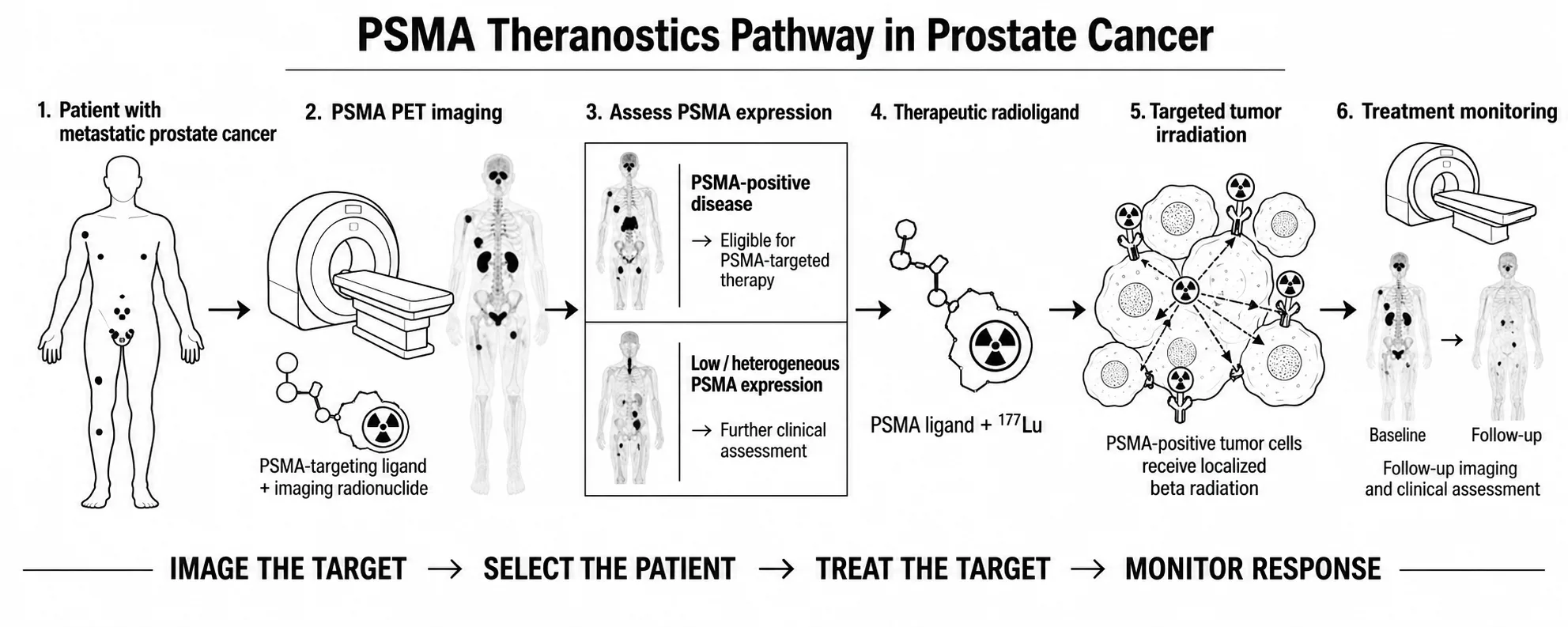
This creates a compelling theranostic pathway:
PSMA PET imaging
↓
Determine whether metastatic disease expresses the target
↓
Select an appropriate patient
↓
Deliver PSMA-targeted radioactive therapy
The pivotal Phase III VISION trial included 831 randomized patients with PSMA-positive metastatic castration-resistant prostate cancer.
Adding ^177Lu-PSMA-617 to standard care improved median imaging-based progression-free survival from:
3.4 months → 8.7 months
and median overall survival from:
11.3 months → 15.3 months.
The hazard ratio for death was 0.62, corresponding to a 38% relative reduction in the hazard of death during the study period. These were clinically important findings. But perhaps equally important for the direction of the field was what happened afterwards.
Researchers began asking:
Why wait until so late in the disease journey?
Radioligand therapy is moving earlier
The Phase III PSMAfore trial studied ^177Lu-PSMA-617 in taxane-naïve metastatic castration-resistant prostate cancer after progression on an androgen receptor pathway inhibitor.
In its updated analysis, median radiographic progression-free survival was: 11.6 months with ^177Lu-PSMA-617
versus
5.59 months after switching to another androgen-receptor-pathway inhibitor. The hazard ratio was 0.49.
The treatment has now moved earlier again.
In July 2026, the FDA approved lutetium Lu 177 vipivotide tetraxetan together with androgen-receptor-pathway inhibitor therapy for adults with PSMA-positive metastatic androgen-pathway-modulation-naïve or -sensitive prostate cancer. The decision was based on the Phase III PSMAddition trial. The study randomized 1,144 patients — 572 per treatment arm. Adding ^177Lu-PSMA-617 reduced the relative hazard of radiographic progression or death by 28%: HR 0.72; 95% CI 0.58–0.90; p=0.002.
Median radiographic progression-free survival had not yet been reached in either arm at the reported analysis, while overall-survival data remained immature.
This evolution is important.
Radiopharmaceutical therapy has moved from a treatment considered primarily after multiple previous therapies toward substantially earlier stages of the prostate cancer pathway.
And that creates a new research problem:
Where should radiopharmaceutical therapy sit within an increasingly crowded treatment sequence?
An oncologist treating advanced prostate cancer may potentially need to consider androgen-receptor pathway inhibitors, chemotherapy, PARP inhibitors in selected populations, radiopharmaceutical therapy and other approaches. As more therapies move earlier, sequencing becomes almost as important as efficacy in isolation.
A 2026 review in Clinical Cancer Research highlights growing investigation of radiopharmaceutical combinations with hormone therapy, DNA-damage-response inhibitors, immunotherapy, chemotherapy and external-beam radiotherapy.
Theranostics changes patient selection
Radiopharmaceutical therapy introduces an unusual form of precision oncology. Traditional biomarker testing frequently relies on a tumor biopsy. But a biopsy samples one piece of tissue from one location at one moment. Metastatic cancer can be heterogeneous. Different lesions in the same patient may not necessarily display identical biology. Molecular imaging offers another perspective. For PSMA-directed treatment, PET imaging can visualize PSMA expression across metastatic disease throughout the body. Indeed, the FDA specifies that patients considered for Pluvicto should be selected using an approved PSMA PET imaging product based on PSMA expression in tumors.
The concept therefore becomes:
Find the target → visualize its distribution → select the patient → deliver the therapy.
This creates important unanswered questions.
- How much target expression is sufficient?
- What if most lesions are strongly positive but several are not?
- Does target heterogeneity predict resistance?
- Should imaging thresholds differ according to disease stage?
- Could repeated molecular imaging guide treatment adaptation?
These are not simply diagnostic questions.
They could influence therapeutic decisions.
Beyond PSMA: could FAP extend radiopharmaceutical therapy across solid tumors?
One of the most interesting emerging areas is fibroblast activation protein, or FAP.
FAP is particularly interesting because the target is associated with cancer-associated fibroblasts within the tumor microenvironment, rather than being restricted to malignant cells themselves. Cancer-associated fibroblasts are present in the stroma of numerous solid tumors.
This raises a fascinating possibility:
Could a shared feature of the tumor microenvironment create a radiopharmaceutical target across multiple cancer types?
Research remains early, but the concept is moving into humans.
A 2026 Journal of Nuclear Medicine publication reported experience with the FAP-targeting radiopharmaceutical 3BP-3940.
The study included: 88 patients
with
21 different advanced metastatic malignancies who collectively received 227 treatment cycles using ^177Lu-, ^90Y- or ^225Ac-labelled 3BP-3940, alone or in tandem.
Importantly, treatment followed confirmation of tumor uptake using FAP-targeted PET/CT.
That creates a particularly interesting theranostic concept:
FAP PET identifies target-positive disease → therapeutic radionuclide delivers radiation to the same biological environment.
However, caution is essential. This was not a randomized Phase III trial, the population was heterogeneous and heavily pretreated, and prospective controlled studies will be required to establish efficacy. The importance of the research is therefore not that FAP-targeted therapy has already been established.
It is that radiopharmaceutical targeting may eventually extend beyond organ-specific tumor markers toward common properties of the tumor microenvironment.
The isotope may become part of precision medicine
Finding the correct biological target is only half of the problem. Researchers must also decide what type of radiation should be delivered to it. Much of the clinical success to date has involved the beta emitter lutetium-177. Beta particles travel a measurable distance through tissue, allowing radiation from one targeted cell to affect neighboring cells. This so-called cross-fire effect can potentially be useful where target expression is heterogeneous. But another area is expanding rapidly:
Alpha-particle therapy.
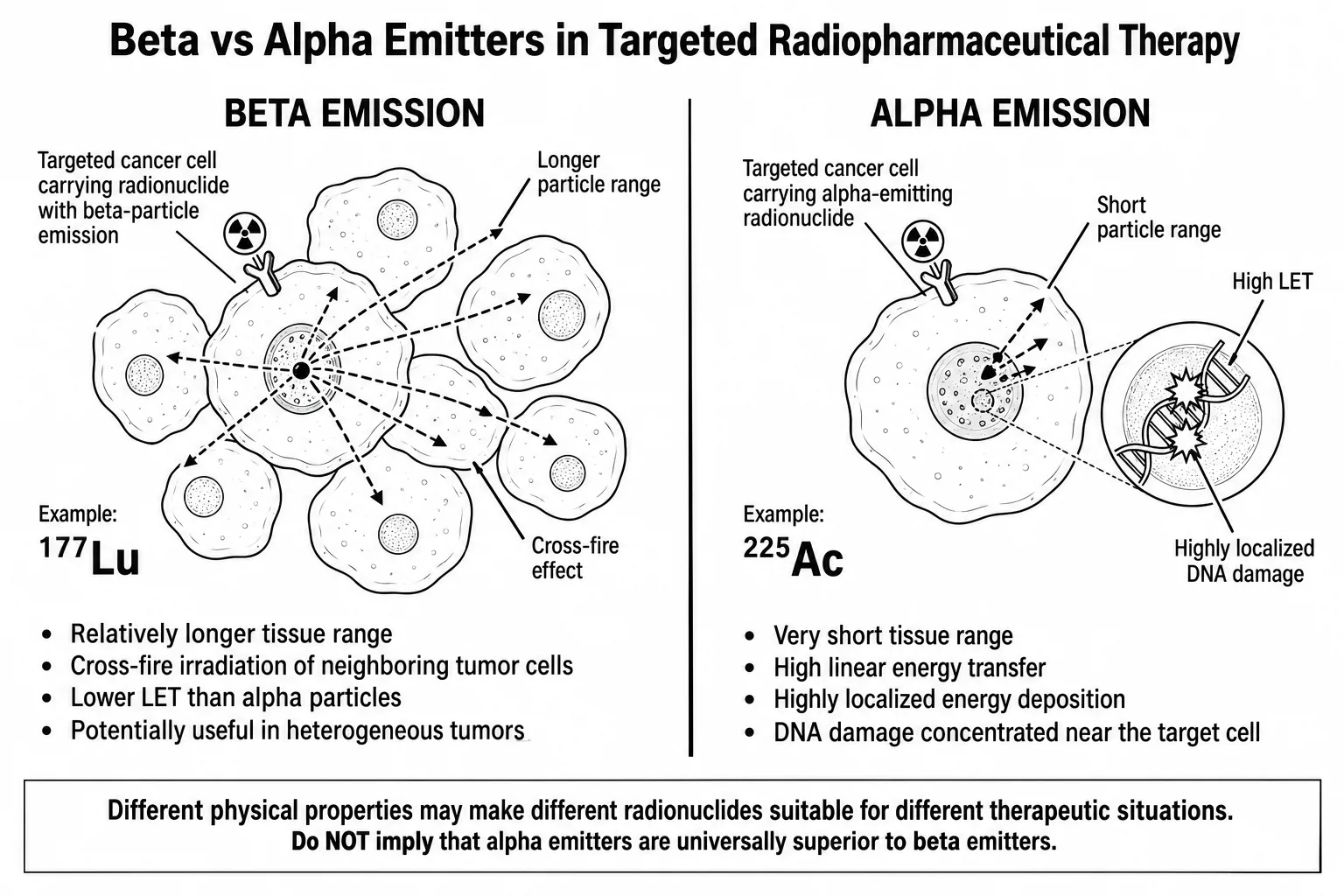
Alpha emitters such as actinium-225 have different physical and radiobiological properties. Alpha particles have a much shorter tissue range but deposit high energy along that short track. This creates intense localized biological damage.
The appeal is obvious: high-energy radiation over a very short distance.
But alpha therapy should not yet be portrayed as a replacement for established lutetium therapy. The clinical evidence is still developing. Research into emerging therapeutic radionuclides now encompasses alpha, beta and even Auger-electron emitters, while isotope production, availability and physical characteristics remain key factors in determining their clinical suitability.
The long-term question could therefore become much more sophisticated than:
Which drug should this patient receive?
It could eventually involve:
Which target?
Which carrier molecule?
Which isotope?
Which radiation range?
Which tumor burden?
Which disease setting?
Is personalized dosimetry the missing piece?
This may be one of the most important unresolved areas in radiopharmaceutical oncology.
External-beam radiation oncology is built around treatment planning. Clinicians calculate how much radiation should reach the tumor and how much surrounding normal tissue can safely receive. Yet some established radiopharmaceutical treatments continue to use relatively standardized administered activity. The same nominal radioactive activity can therefore be administered to patients whose bodies and tumors may handle the radiopharmaceutical very differently.
This matters because:
administered radioactivity is not the same as absorbed radiation dose.
Patients differ in:
- tumor burden
- target expression
- lesion size
- pharmacokinetics
- renal function
- normal-organ uptake
- clearance
- body composition.
A major 2026 review in the Journal of Nuclear Medicine argues that substantial patient-to-patient variation in absorbed tumor and organ dose suggests that fixed-activity approaches may leave some patients relatively underdosed while maintaining substantial safety margins in normal tissues.
Another 2026 review analyzing ^177Lu peptide receptor radionuclide therapy studies reported remarkable variation in calculated absorbed doses.
Reported kidney doses ranged approximately: 0.3–0.9 Gy/GBq
while reported tumor absorbed doses ranged roughly: 1–10 Gy/GBq.
The authors noted that part of this variation reflects differences in imaging schedules, segmentation and dosimetry methodology — illustrating both the potential and the standardization challenge.
That produces one of the most important questions in the field:
Should radiopharmaceutical therapy ultimately be prescribed according to the amount of radioactivity administered — or according to the radiation actually absorbed by each patient’s tumors and organs?
If prospective trials demonstrate that personalized dosimetry meaningfully improves outcomes, this could become one of the defining developments of next-generation radiopharmaceutical treatment.
The next frontier may be combinations rather than monotherapy
Radiopharmaceutical therapy does not exist in isolation. Radiation damages DNA and produces biological responses that potentially interact with several other therapeutic mechanisms.
This has created interest in combinations involving:
- androgen-receptor pathway therapy
- PARP and other DNA-damage-response inhibitors
- immune checkpoint inhibitors
- chemotherapy
- radiosensitizers
- external-beam radiotherapy
- potentially combinations of radiopharmaceutical approaches.
A September 2026 review in Clinical Cancer Research notes that although several targeted radionuclide therapies have produced important clinical results, most patients eventually relapse after radiopharmaceutical monotherapy. That makes rational combination approaches an increasingly important area of investigation.
But combinations introduce additional questions.
- Does another treatment increase tumor sensitivity to radiation?
- Can target expression itself be increased?
- Does the combination increase toxicity to bone marrow, kidneys or other organs?
- Should treatments be given simultaneously or sequentially?
- Which patients require combination treatment and which can achieve adequate control with radiopharmaceutical therapy alone?
These are exactly the kinds of questions that will determine whether promising mechanistic combinations become useful clinical strategies.
Scientific progress does not automatically mean clinical adoption
There is another important dimension to this story.
Radiopharmaceutical therapy requires more than an oncologist writing a prescription.
Treatment may involve:
- nuclear medicine
- molecular imaging
- radiopharmacy
- medical physics
- radiation safety
- nursing
- specialized logistics
- medical oncology
Radioisotopes also have physical half-lives.
That means manufacturing, transport and treatment scheduling matter differently than they do for many conventional medicines. A 2026 Journal of Nuclear Medicine review describes manufacturing capacity, radionuclide supply, imaging access, reimbursement and treatment infrastructure as increasingly important considerations as radiopharmaceutical therapy expands. The adoption question is therefore not simply:
“Does the therapy work?”
Healthcare systems may also need to determine:
- Can we identify the appropriate patients?
- Can we obtain the isotope reliably?
- Do we have sufficient nuclear-medicine capacity?
- Can imaging and treatment appointments be coordinated?
- Can dosimetry be integrated without creating unsustainable workflow burden?
- Who owns the patient pathway, medical oncology, nuclear medicine or a multidisciplinary team?
These operational questions could materially affect real-world uptake even when clinical evidence is strong.
What should oncology research now be asking?
As radiopharmaceutical therapy moves from specialist practice toward broader oncology, understanding the science alone will not be enough. The next stage will require understanding how the technology is interpreted and adopted by the people responsible for using it. For healthcare and pharmaceutical market research, several questions are becoming particularly relevant.
1. How do oncologists perceive radiopharmaceutical therapy?
Do physicians see it primarily as radiation therapy, systemic therapy, targeted therapy or an entirely new treatment category? That perception may influence referral behavior and treatment ownership.
2. How will treatment sequencing change?
As radiopharmaceuticals move into earlier disease settings, researchers need to understand where clinicians expect them to sit relative to established systemic treatments.
3. What evidence changes prescribing behavior?
- Overall survival?
- Progression-free survival?
- Quality of life?
- Duration of response?
- Reduced chemotherapy exposure?
- Dosimetry data?
The evidence hierarchy valued by physicians may differ across specialties and health systems.
4. How important is molecular imaging in treatment decisions?
Theranostics changes the relationship between diagnostics and therapy. Understanding how physicians interpret PET positivity, heterogeneous lesions and quantitative uptake could become increasingly important.
5. What prevents adoption?
Clinical evidence may be only one determinant. Other barriers could include:
infrastructure → referral pathways → radionuclide availability → reimbursement → radiation-safety requirements → treatment capacity → multidisciplinary coordination
6. What do patients understand about radiopharmaceutical therapy?
The word “radioactive” may carry very different associations from familiar terms such as targeted therapy or immunotherapy. Patient research can explore perceptions of radiation, treatment expectations, practical burdens, safety concerns and willingness to travel to specialist centers.
Why these questions matter for healthcare research
At FMR Global Health, the evolution of radiopharmaceutical therapy is particularly relevant because its adoption involves much more than measuring clinical efficacy. Understanding a new oncology treatment pathway can require research across oncologists, nuclear-medicine physicians, radiologists, radiotherapists, patients, caregivers, hospital decision-makers and other stakeholders.
FMR’s oncology research experience has included qualitative and quantitative work examining patient journeys, physician treatment choices, unmet needs, treatment algorithms, adoption drivers and barriers across oncology. FMR Global Research Oncology case-study page. Radiopharmaceutical therapy creates an especially interesting research environment because therapeutic innovation, diagnostic imaging, treatment sequencing and healthcare infrastructure all converge within the same patient pathway.
Potential research questions could include:
- Treatment algorithm mapping
Where will radiopharmaceuticals enter the treatment pathway? - HCP segmentation
Which physicians are early adopters, cautious adopters or unlikely adopters? - Referral pathway research
How do patients move between medical oncology and nuclear medicine? - Patient journey research
What does the treatment experience look like from diagnosis and biomarker testing through therapy? - Target product profile evaluation
Which efficacy, safety and operational attributes drive preference? - Conjoint or choice research
How do clinicians trade off efficacy, toxicity, treatment frequency, imaging requirements and administration complexity? - Access research
Which infrastructure and reimbursement barriers could constrain adoption?
For developers entering radiopharmaceutical oncology, understanding these behavioral and operational dimensions early may become as important as understanding the competitive clinical landscape.
From targeted radiation to personalized radiotheranostics
Radiopharmaceutical therapy has already demonstrated that systemically delivered, molecularly targeted radiation can improve clinically meaningful outcomes.
- NETTER-1 established an important role for ^177Lu-DOTATATE in somatostatin-receptor-positive neuroendocrine tumors.
- VISION established ^177Lu-PSMA-617 in advanced PSMA-positive prostate cancer.
- PSMAfore moved treatment earlier.
- And PSMAddition has moved PSMA-directed radioligand therapy into metastatic hormone-sensitive disease.
- Meanwhile, research is expanding toward FAP and other targets, alpha-emitting radionuclides, combination treatment strategies and patient-specific dosimetry.
The direction of travel appears increasingly clear.
The future of radiopharmaceutical therapy may not simply be:
one target + one radioactive isotope + one fixed dose.
It could become considerably more individualized:
The right target
↓
The right radionuclide
↓
The right patient
↓
The right absorbed dose
↓
The right combination
↓
The right point in the treatment journey
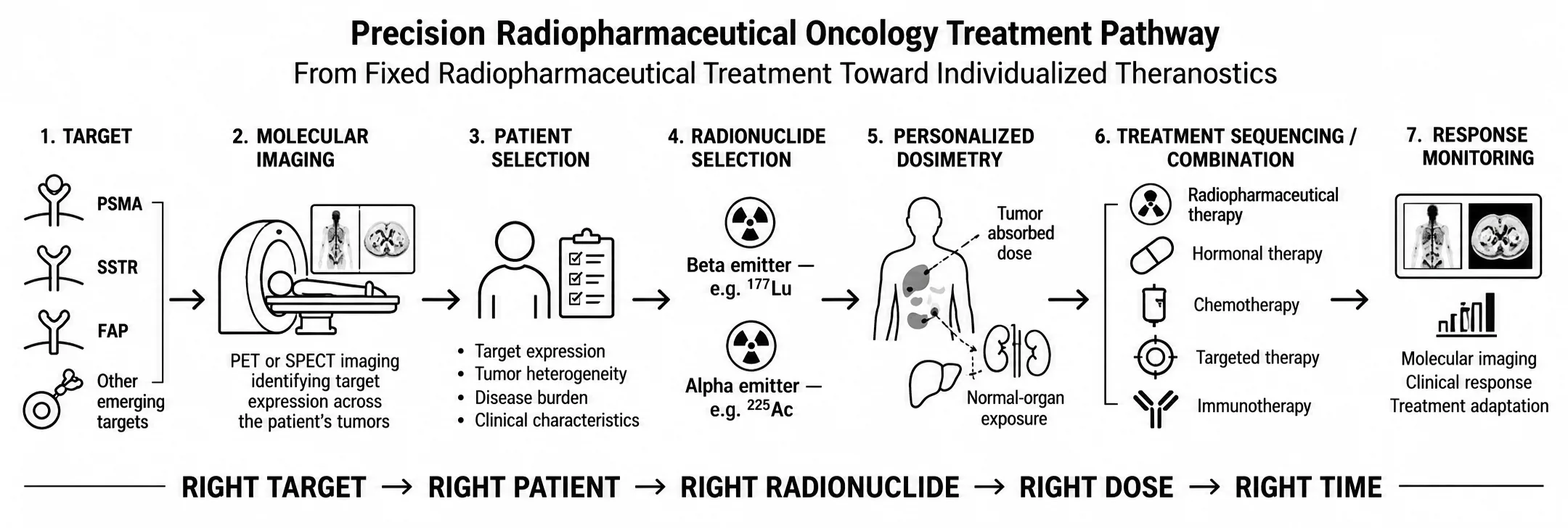
That would represent something more significant than another new oncology drug class. It would represent the convergence of: molecular diagnostics + precision medicine + systemic therapy + radiation biology. And as the clinical science develops, one of the most important research challenges will be understanding how this increasingly sophisticated therapeutic model translates from clinical trials into real-world oncology practice.
About FMR Global Health
FMR Global Health is the healthcare research arm of FMR Global Research. With more than 37 years of healthcare market research experience and international research capabilities across 50+ countries, FMR conducts qualitative, quantitative and hybrid research with healthcare professionals, patients and other healthcare stakeholders. Our oncology research explores areas including patient journeys, treatment algorithms, treatment adoption, unmet needs, product development, positioning and healthcare professional decision-making.
Contact FMR Global Health For discussions around oncology research, treatment-pathway research or understanding HCP and patient perspectives around emerging therapies, contact the FMR Global Health research team.